Interview
Blog
"Your body does not lie": Gary McDermott on bringing real terrain to indoor golf
Simulators have become remarkably precise, but every shot is still hit from a flat surface. Platform Golf's Gary McDermott explains how real terrain is coming indoors, and why it changes everything from coaching to tournament play.
Author
Timothy Beumer
Published
Category
All
LAST UPDATED


Author
Timothy Beumer
Timothy is the founder of Findoori, with 15+ years of experience across the golf industry. Having worked closely with indoor golf centers and visited locations around the world, he is driven to build a central platform that helps golfers discover where to play and helps centers grow their visibility.
Inside the world of indoor golf.
New technology, insights, and stories from indoor golf centers, delivered to your inbox.
Get updates on our latest blog posts.
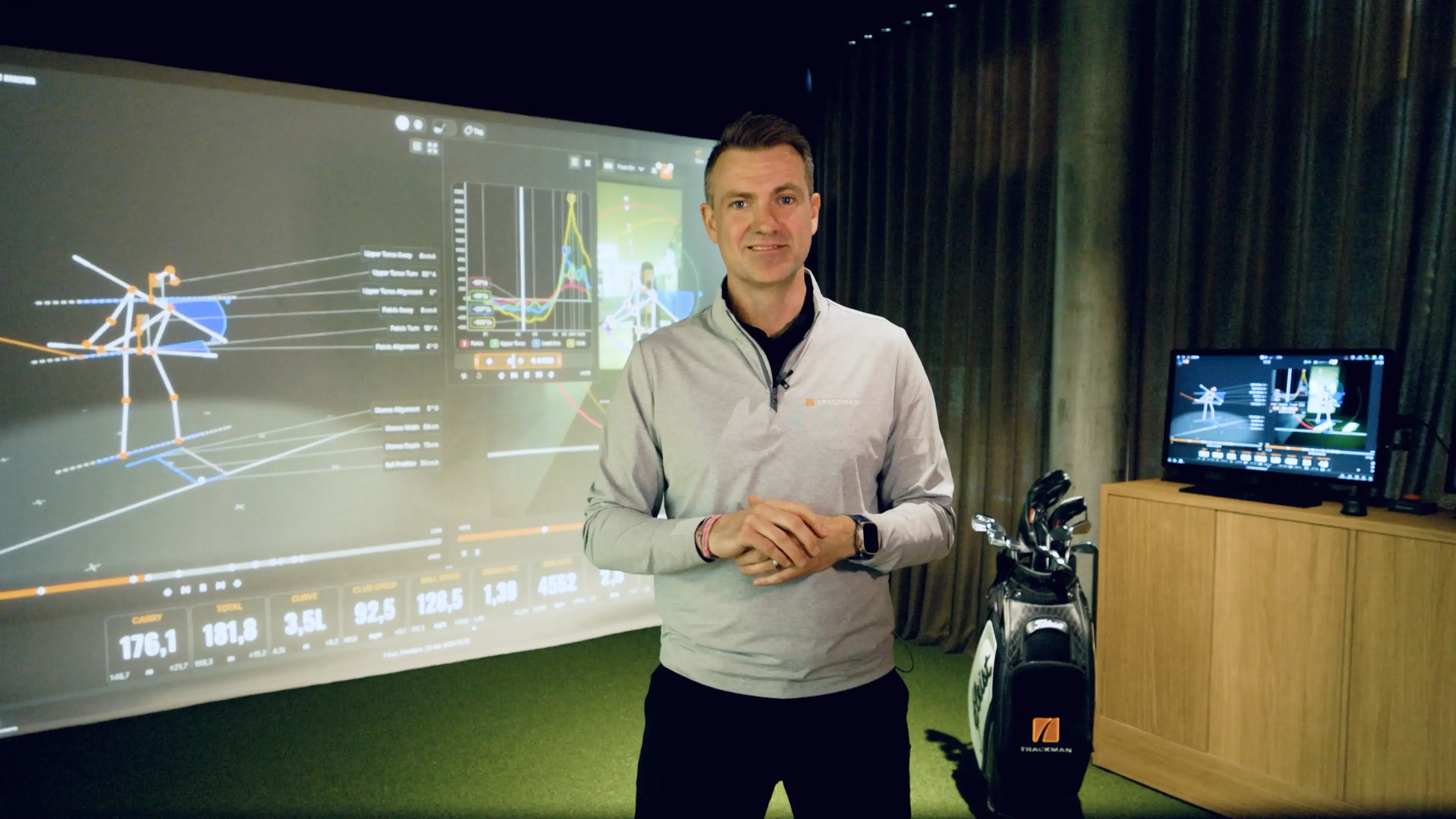
Gary McDermott is VP of Global Sales at Platform Golf, the company behind the TrueSlope, TrueBreak and TruePR Platforms that physically recreate real-world lies and slopes under a player's feet in real time. A former elite amateur who represented Ireland at national level, Gary spent five years at TrackMan, four of them on tour, before joining Platform Golf. We spoke to him about the one thing simulators still cannot fake: the ground you stand on.
"Your body does not lie": Gary McDermott on bringing real terrain to indoor golf
Gary McDermott's route into golf technology started with an honest conversation with himself. "I knew relatively early on that my golf career was never going to be with clubs in my hand at a professional level," he says. Rather than walking away from the game, he found another way in: a sales role at TrackMan in Ireland, followed by four years on tour in a supporting role. "Standing alongside some of the best players and coaches in the world, watching how they used data to make decisions. It gave me a really grounded understanding of what actually matters to a tour-level performer versus what just looks impressive."
That perspective eventually led him to Platform Golf. "When I saw what the technology was doing, physically recreating real-world lies and slopes underfoot in real time, it was immediately clear this was a genuine step change for the industry."

The flat mat problem
Indoor golf has closed enormous gaps in recent years. Ball flight data, course rendering, wind, shot shaping: the best simulators are remarkably capable. But one gap has stubbornly remained, and according to Gary it is the one that matters most.
"Golf is played on terrain that is constantly changing. Uphill, downhill, sidehill, often a combination of all three. Your body responds to that instinctively. Replicating that on a static flat surface, no matter how good the software, means you are always playing a subtly different game indoors than out."
For years that was simply accepted, because the industry was focused on data accuracy. "The physical environment the player was standing on was not really part of the conversation," Gary explains. "What has changed is that the people using this technology have changed. Golfers are now genuinely trying to improve, not just be entertained. When performance becomes the goal, the flat mat problem becomes very hard to ignore."
The numbers make the point: the vast majority of approach shots on a real course are played from some degree of uneven lie. Indoors, every single one of those shots is hit from a flat surface.
A platform in conversation with the simulator
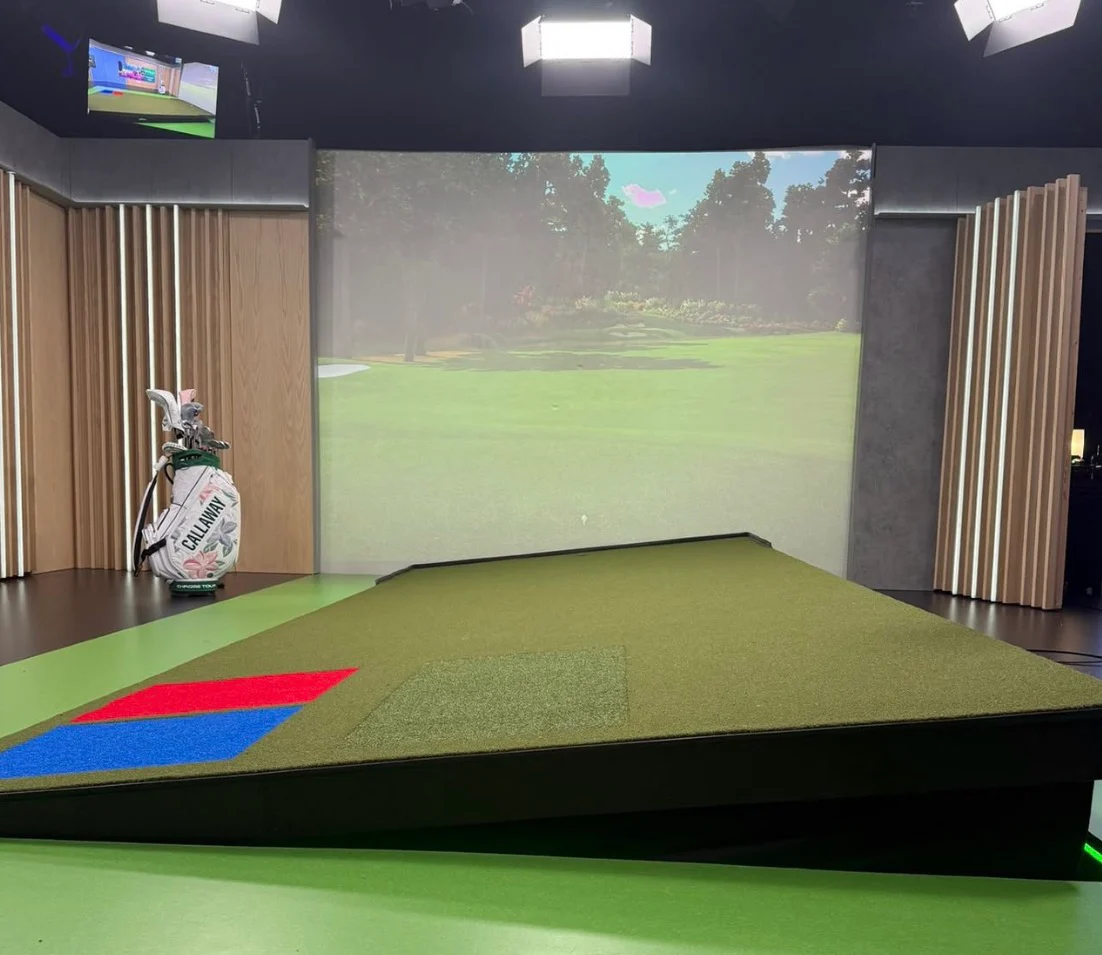
So how does a surface that tilts in real time actually work? "The TrueSlope Platform is in constant conversation with the simulator," Gary says. "As you move through a round, the software reads the course data for every shot: the lie, the gradient, the direction of the slope. Independent actuators adjust the pitch and roll of the surface to recreate what your feet would feel standing on that exact spot on that course."
The effect, he argues, is something no screen can deliver. "Your body does not lie. When the surface tilts, you feel your weight shift, your balance change, your setup instinctively adjust. You are not processing a number on a screen. Your body is just responding to the ground the way it always has."
The same logic applies to putting, where the TrueBreak Platform is built on globally patented inclinometer technology. "That is not a marketing detail. When you are collecting baseline data on a player's putting, you need to know that the surface is doing exactly the same thing every single time. You miss a putt on our Platforms and you understand why in a way that feels real, because it is real."
Full circle with TrackMan
Platform Golf recently announced an integration with TrackMan, which for Gary carries a personal dimension. "It feels like a natural full circle. TrackMan are the gold standard not just in ball flight data but in golf launch monitor technology broadly. Combining that level of precision with a surface that physically replicates the lie the player is standing on creates something genuinely powerful for performance, coaching and the overall simulation experience."
For coaches, that combination unlocks something that simply did not exist indoors before. "Understanding how an uneven lie directly impacts the critical data points, from club path and low point to launch angle and spin, is something that was not possible indoors. Beyond the numbers, it gives coaches the ability to study how the body sets up and reacts from uneven terrain and to build training programmes around those tendencies."
And for the casual golfer? "When the surface beneath you tilts to match the slope on screen, it stops feeling like a video game and starts feeling like golf. That shift in experience is what keeps people coming back, and it is what drives the commercial case for facility owners."
Indoor golf with intent
Gary sees the European indoor golf market changing in character, not just in size. "A few years ago indoor golf was largely positioned as an alternative to being outside, something you defaulted to when you could not play. What has changed is the level of intent behind it. Coaches are designing full training programmes around indoor technology, clubs are treating simulator bays as a genuine performance facility rather than a rainy day option."
His advice to venue owners weighing up the investment is direct. "The centres that are winning are the ones differentiating on the quality of the experience, not just screen size or number of bays. Serious golfers have options. If you can offer something that genuinely elevates their practice, that commands premium pricing and builds the kind of loyal customer base that is very hard to replicate."
Qualifying a score, for the first time
The theme Gary keeps returning to is standardization. Until you can replicate real terrain conditions, he argues, an indoor score always carries an asterisk. "Every result is caveated by the fact that the conditions were artificial. With our platforms and our SSG software, that changes. For the first time you have the physical and data infrastructure to properly validate what a round of golf actually represents."
The implications reach further than practice. "A competition played simultaneously across indoor facilities in Dublin, Dubai, New York and Tokyo, with results that actually mean something, is not a distant concept. The building blocks are there right now."
Looking five years ahead, he expects the biggest shift to be in perception rather than technology. "Right now there is still a mental hierarchy where outdoor golf is the real thing and indoor golf supports it. I think that distinction softens considerably. Not because indoor golf replaces the outdoor experience, it never will and it should not, but because the quality of what you can do indoors will be demonstrably good enough to stand on its own merits."
And if he could change one thing about how golfers see indoor golf today? "That it is a compromise. I would love to shift that to genuinely complementary, an environment that adds something real to your game rather than substituting imperfectly for it. The technology is at a point now where that argument is very easy to make. The perception just has not caught up yet."
Other Blogs
Why stop here?
Explore more about indoor golf.